Tag: travel advice

  • Surviving a Long Flight

    Surviving a Long Flight

    Tips, Tricks & Gadgets to Help You Through the Journey

    You’re booking a trip (or already have!) but now you’re dreading the 10+ hour flight. Surviving a long flight is no joke. How do you do it?

    I’ve taken many flights and only recently took my longest yet – NYC to Kenya. The way there took 13.5 hours, and the way back was 15. That was just the longest leg of the three-flight trip, but that was the hardest part!

    Now, what did I do to get through it? How did I prepare, and what did I bring? Here are some things that worked for me:

    Note: This article may contain affiliate links so that I may earn compensation for qualifying purchases as part of the Amazon Affiliate program.

    Tools for Surviving a Long Flight

    Preparing for the Journey

    Step one of surviving a long flight is taking care of yourself in the moments leading up to it. Some keys to that are:

    1. Stay hydrated
      • Not only in the hour or so before the flight, but throughout the week leading up, try to keep as hydrated as you can. You don’t need to chug water, but keeping a steady flow of drinking water is a good place to start.
    2. Take an airport walk
      • Before our flight, I had a 7 hour layover in JFK. It could’ve been easy to sit or lay on the floor and waste away, but that’s no good. If you’re about to be stuck in one spot for a long time, you’re going to want to move around. This will help with blood flow, as well as limit your restlessness once seated.

    How to Stay Entertained in the Air

    One to surviving long-haul flights in my experience is in keeping yourself entertained. Once your mind starts to wander, you focus on how bored you are, any discomfort you’re experiencing, etc. Here are two of my favorite ways to stay entertained during the journey:

    1. Watch movies – with an AirFly!
      • Most international (and even some domestic) flights have seatback entertainment systems to watch movies, play games, listen to music, and more. I don’t know about you, but I do not like the airline-given headphones. I’d much rather use my Bluetooth Beats I’ve had for 4 years. The AirFly was the solution! It is a bluetooth adapter for headphone jacks that let me use my preferred headset without worrying about cord-related issues. Truly one of the best things I asked for over the holidays!
    2. Read a book
      • I bring at least one book on every trip – usually I try to find one that’s set in my destination. For my trip to Tanzania, I brought along one of Jane Goodall’s books, In the Shadow of Man. I can’t recommend it enough!
      • If you’d rather have a book with internal lighting, try out a Kindle or other e-reader with the Libby app.

    Self Care on a Plane

    The second key to surviving a long flight is taking care of yourself. I know this can be easier said than done. Some things may not even come to mind at first. However, here are some of my tips for self care on a long journey:

    1. Choose your seat at booking
      • Personally, I always pick a ticket where I can choose my seat for comfort. In this case, I did end up paying more for extra legroom. As someone with a spinal condition and semi-recent surgery, I needed to be able to easily move around the cabin and stretch/get my blood flowing. My best advice is to pick where you’ll be most comfortable, as long as it’s not out of budget or within reason. If you wait too long, sometimes those are taken, so make sure you book early if it’s important to you!
    2. Stay hydrated (yes, again)
      • I always travel with a reusable water bottle and try to fill it before boarding (where the airport allows). I usually travel with my filtered LifeStraw bottle anyway, but any reusable bottle will do.
    3. Stay hydrated (have I told you enough yet?)
      • You may not think about it, but your eyes are very likely to get dry when you spend a long time on a plane. I saw these LumiDew Steam Eye Masks on a video before I left and I was glad to have packed a few – the heat and hydration really helped, and I even got a bit of rest after using them.
        • (Note: Please talk to a doctor before use if you have had recent surgeries or have other eye conditions).
    4. Wear compression socks
      • Similar to moving around, wearing compression socks will help with any potential circulation issues that arise from being in the air for so long. I recently bought some Wellow socks and they were incredibly comfortable!
    5. Bring snacks
      • Long-haul flights require that meals be provided, but I regretted not bringing a snack of some kind for the in between. I didn’t always love the food offered, and it wasn’t always at the time when my body needed something, so definitely bring at least a small something to get you through.
    6. Get some rest
      • Okay, this is easier said than done, I know. I usually pick a window seat to rest on for that reason – but I have yet to find a good pillow. One thing that helped me was using my Loops Quiet ear plugs. They’re made entirely of silicone, so they were comfortable for long-term wear. They also really blocked out the noise.

    Surviving the Journey

    Overall, the key to getting through a long flight is taking care of yourself – both physically and mentally. Be mindful of your neighbors, but don’t be afraid to get up and move, go stretch, take a restroom break, etc. Don’t hold yourself to just the airline entertainment; if you do, make sure you’re prepared with headsets you’re comfortable with and an adapter if you need it. With these tips, you should be well on your way to surviving your long flight!

  • Embracing Cultures Around the World

    Embracing Cultures Around the World

    How to Adapt To and Learn About New Cultures While Traveling

    Something that can be scary to folks that haven’t traveled internationally yet is the thought of embracing new cultures. How do you adapt to a new place? What if you don’t speak the language? Will you like the food? It can all be overwhelming.

    Transparently, even well-traveled people may struggle with exposure to some cultures different from their own. I know that I personally worry about new places, especially those unlike home. There are several ways, however, that I prepare myself to be more comfortable in these situations. Traveling is learning – about the world, about others, and about yourself. It’s okay to feel discomfort, it’s all about how you adapt to it.

    Embracing Speaking Culture: What if I don’t speak the language?

    I’ve been countless places where I spoke very little of the language, or even none at all. You may be asking how you can embrace new cultures if you don’t share language. My best advice is to try and learn a few simple phrases before going, such as:

    1. Please and thank you.
    2. Do you speak [insert native language here]?
    3. Where is the bathroom?
    4. Cash/credit card (for buying food and souvenirs)

    Before going somewhere, I also try to expose myself to as much of that language as possible ahead of time. For example, I knew I was going to Peru over a year in advance, and that Spanish was the main language I’d hear. I found a podcast called Coffee Talk Spanish and would listen any time I had to drive. I picked up some simple phrases, and was exposed to different accents and speaking speeds. While I didn’t become fluent by any means, I could have simple conversations with shopkeepers and waiters and felt more comfortable.

    As a failsafe, I always download the Google translate app and specifically the language of the region I’m visiting. That way, even if I have no cell service, I can communicate in a pinch. This was actually a lifesaver on my trip to Japan. I obviously hadn’t picked up Japanese very quickly and got lost when I took a train too far outside the touristy areas. I used the app to ask staff at a 7/11 how to get back to the train station. They were able to find someone in the shop that actually worked at the station, who walked me back. Talk about lucky!

    Sketch of a person asking a barista "Do you have milk that isn't from a cow?"
    True story: I once forgot the term “oat milk” in Spain and this is how I asked

    Embracing Clothing Culture: What should I wear in [x country]?

    A region’s clothing customs is something that I often try to look into ahead of a trip. In most cases, if you’re visiting touristy areas, you can get away with your regular outfit choices. That being said, it’s important to be respectful of the place you’re visiting. A few examples I’ve come across are:

    1. In most churches in Italy, you have to have your knees and shoulders covered to enter. This includes even the most touristy churches, like the Vatican. You can and will be denied entry if you’re deemed to be too exposed.
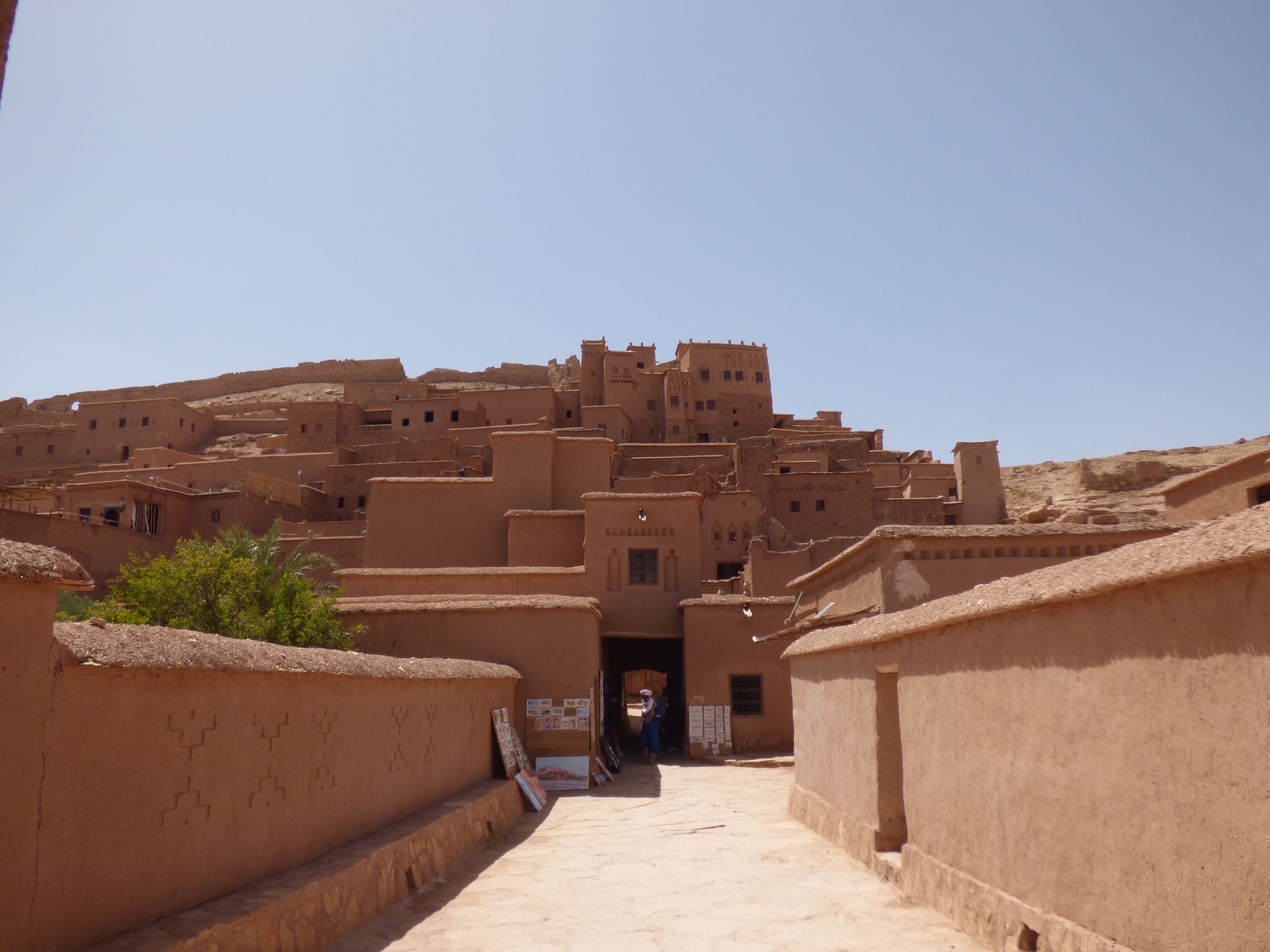
    2. In Morocco, most women that live there dress more modestly. While you won’t be noticed as much for not doing so in places like Marrakech, it’s still the most respectful thing to do. I made sure to pack lightweight, long trousers and a top or scarf I could use to cover my upper half. This offered added protection from the sun as well.

    Not only can dressing similarly to the locals help with respecting customs, it can help you blend in a bit. You’re less likely to be targeted as a tourist, I’ve found, the more you try to assimilate. Embracing a culture’s clothing practices can be beneficial in more ways than one.

    Embracing Food Culture: I’m a picky eater – should I still go to [x country]?

    Short answer: YES. One of the best parts of experiencing a new culture, in my opinion, is the food. That being said, I know everyone has different dietary needs and preferences. Here’s my advice on this one:

    1. Look up some staple dishes in the place you plan to visit. Pinpoint which you’d be willing or able to try.
    2. Stock up on snacks as backup. I’ve had to do this a few times myself when my stomach simply was not agreeing with the spices used (looking at you, Morocco). Even when I enjoy the food, I can’t always have it. Having something like protein bars or bread in my hotel or daypack can be a lifesaver.
    3. Explain dietary needs ahead of a meal, if you’re able. My host family was incredibly accommodating in Italy, and would try to find local foods that I could have. This also makes it clear that you’re not being rude, you just can’t have the meal.
    4. Stick to things you know. If you know you like meat and potatoes – find that kind of dish. If you are a pasta girl like myself, there’s almost always something similar available. Trying local versions of “safe” foods is still exposing yourself to the culture!

    Embracing Religious Culture: Differences in religions and beliefs

    This one can be tough for people for different reasons. Some may have strong beliefs of their own. Others may have no beliefs at all and don’t understand religious emphasis. Myself? I’m somewhere in the middle. I try to approach different religions with an open mind and, if nothing else, respect.

    Some regions emphasize religion and spirituality. We may not always agree with one another, but there are a few ways we can show basic respect:

    1. If you plan to visit a religious site, do your research.
      • Before I went to Japan, I knew I’d want to visit temples throughout Tokyo for their historical significance. I researched best practices for entering certain sites, and what was or wasn’t permitted by tourists. One thing I made sure to do was dress appropriately if going inside. I also learned about cleansing practices before entering.
    2. Listen to locals.
      • Not every setting is open for visitors. Some practices only allow certain groups within a religious building. For example, we learned about Islamic practices in Morocco and surrounding buildings. However, we were not allowed to enter active mosques if we were non-Muslim. If a sign or individual asks you not to enter, or engage in a particular behavior, please listen to them.

    I’m by no means saying we should all engage in religious or spiritual activities that we do not wish to. What I am saying is that we need to, as travelers, be mindful of the customs of places we are visiting. Even if something is advertised as a place to see at your destination, know that there could be more significance to it.

    How else can I embrace new cultures?

    Aside from the key points I mentioned above, my best advice to you is to research, but also to listen to representative voices. Don’t just listen to travel bloggers (myself included!). If you really want to know about a place’s culture and customs, tune in to and elevate local voices.

    Responsible cultural experiences

    As you continue to branch out in your travels, you’ll find a lot of offerings of “authentic” cultural experiences. Sometimes, they may be. Other times, it’s often people profiting off of tourists wanting to learn. I’ve been guilty of this myself, but what’s important is learning from those mistakes.

    Some of the best cultural learning experiences I’ve had have been through my trips with EF Ultimate Break. Since those tours are directed by locals to the country you’re visiting, the activities are also planned by them. In Belize, our director arranged for us to learn about Garifuna drumming. Our director in Morocco arranged for our group to visit a Bedouin/Berber family in the Sahara. We sat down and had tea with the family and learned about their life and practices. We also visited a local music house, Dar Gnaoua Bambara Khamlia, for a performance.

    Be open to cultural learning

    One thing about me is, if I don’t understand something, I’m finding the answer. This has especially held true when it comes to embracing the cultures of the places I visit. I love asking questions (respectfully, of course). My tour directors with EF and the guides they hire are the perfect people to ask. Even if you don’t go with a group, don’t be afraid to ask questions of staff and volunteers at different sites and museums.

    As I mentioned before, I also always try to do research on an area’s customs before arriving. I like to be prepared so that I don’t accidentally offend someone (or even break a law). If you aren’t sure of something, don’t guess – look it up! There are some things you may find mixed answers on, but that’s where I go back to my previous point. Amplify and listen to indigenous voices. If an American citizen says one thing, but a Peruvian something else, and I’m visiting Peru? I’ll be putting more stock into what I heard from the Peruvian individual.

    Learning Culture through Travel

    Like I’ve said before, travel is about learning and embracing the new. It’s about leaving your comfort zone. Being exposed to new cultures is one of my favorite parts about visiting another part of the world. I’ve learned so much not just about the places I’ve visited, but also myself. By embracing culture through travel, I’ve found new favorite foods and even new belief systems that I’ve applied to my life. I strongly encourage each of you to do the same. Learn, embrace, and adapt. Be respectful and mindful in your choices and actions. Most of all, have fun doing it!

    Garifuna drumming - Belize
    Garifuna drum lesson in Belize

  • Making Travel Affordable

    Making Travel Affordable

    Tips on how to budget for traveling

    There’s no lie to the belief that travel expenses can add up. From hotels and flights to activities and food, how do I make travel more affordable? Below are some tips for managing travel expenses and budget for trips that I like to use myself.

    Afford higher budget trips using payment plans.

    Especially when it comes to big trips, I often book with companies that allow for payment plans. One of my favorite tour companies that allows this is EF Ultimate Break. They also have a few sister companies with similar models.

    Group trip through EF Ultimate Break
    Tour Group with EF Ultimate Break

    Anything that allows me to put down a deposit and make payments along the way is a plus in my book. I’ve also put bigger expenses such as flights on payment plans through Uplift (now Flexpay) or Affirm. There is interest involved, but it’s fixed and factored into your monthly payment plan. Just make sure whatever the monthly amount is fits into your regular budget.

    Book through a tour company

    One of the other perks of traveling with a company such as EF is that they often get discounted rates. Overall, this makes their trips a more affordable option than trying to book it all yourself. They can get group rates on hotels and discounts on flights and activities. For example, the cost of five extra activities on my trip to Belize cost me the same as one of the activities would have been if booked privately. This makes group travel often a more affordable option for those big, eventful trips.

    If you’re unsure of when to book with a group or not, check out my blog on how to plan a trip on your own.

    Reserve now/pay later to make payments manageable.

    Similar to payment plans, I try to book hotels or activities that are Reserve Now, Pay Later. This allows me to keep shopping for other deals while not having to worry about losing a booking in most cases. It also gives me extra time past making the reservation to pay for it or save up. By the time the trip comes, I have either set aside the funds or paid on my own leading up to my arrival. By doing so, travel is made more affordable in the longterm.

    Use pay over time or reserve now, pay at property filters like this to make travel more affordable.

    Use credit card points to afford flights and hotels.

    Note: I am not affiliated with or sponsored by Capital One. I personally use the card and I may get a bonus from approved referrals at the link below.

    Capital One's rewards and benefits

    I currently have the Capital One Savor One card. This card gives cash back for all purchases, with the highest being dining and entertainment. I try to put most purchases on the card to accrue points that I can later use in their travel portal. My best advice if you go this route is to make sure you find a card that works for you, and only spend what you know you have the budget in your bank for. I’ve previously saved up to get a discount on plane tickets, and the points can also be used toward hotels and car rental.

    If you’re interested in applying, here is my referral link for their Savor Card: https://i.capitalone.com/J8AbdE3qX

    Many cards exist with similar cash back options. Utilize the best method for yourself, and shop responsibly.

    Equip price tracking tools to book at the most affordable times.

    Another perk of my Capital One card is that I can track flight and other travel prices through their portal. Even if I don’t book through the travel portal, I sometimes use this tracking tool to guide the best time for me to buy my tickets.

    These types of tracking tools exist on many different travel-related sites. Some other tools I use include:

    • Expedia
    • Google Flights
    • Hopper
    • Skyscanner
    Travel price tracking tool from Expedia
    Expedia’s Flight Price Tracker

    Plan your trips in advance.

    When possible, I try to plan trips as far in advance as possible. This goes hand in hand with my payment plans. The further out I book, the smaller the monthly or bi-weekly payments are. This also helps with being able to save up for and plan the extras for the trip itself.

    For example – each of my group trips I’ve booked over a year out. I made my deposit during Black Friday with EF Ultimate Break. They have their own payment plans, or the option to make a higher deposit and pay by a specific end date. By planning it out that far, the payments and deadline are much more manageable.

    Be flexible with your budget and plans.

    We all have our ideas of dream vacations. I love the idea of a luxury experience everywhere I go. However, I know that’s not usually a reasonable expectation. I’ve learned to be more flexible with what I want out of a trip, including where I stay.

    When I went to Portugal solo, I wanted to book with a hotel rather than a hostel for privacy. With the hotel rates, the best compromise was to book a private ensuite room in a hostel instead. This honestly ended up working out really well for me!

    I’ve also learned to be more flexible with other items – where I plan to go out to eat, balancing tours vs. solo experiences, etc. This helps manage not only expectations, but my budget as well.

    Afford expensive destinations by traveling in the shoulder seasons.

    As long as your plans don’t revolve around a specific time of year, one of the best ways to save money is by traveling during shoulder seasons. I’ve done this a few times in the last couple of years. For example, I traveled to London in April and Portugal in October. Not only do you benefit by usually having fewer crowds, you can also save money. This is especially useful in destinations that can be on the more expensive side, like parts of Europe in the summer. If you can be okay with certain weather conditions and other minor inconveniences, you can make your trip that much more affordable.

    Shop sales for the most affordable travel options.

    Like I mentioned previously, I often book my EF tours in advance and one of the best times to do that is during their Black Friday sale. They also have sales throughout the year, and will price match up to a certain time after initial booking if the cost of the tour goes down. Additionally, repeat travelers receive a new discount code after every trip!

    In addition to EF’s sales, I use email subscriptions and more to keep up with other sales. These can be sales on airlines, tours, and more. One of the best times of year to book is Travel Tuesday, a big time for discounts specifically in the travel industry. This comes the Tuesday following Black Friday, with some companies announcing deals in advance. These sales are especially useful if you have flexibility in timing or destination.

    Make extra income to put toward travel.

    While I do work full time, I also work a second job. Since I work remote, I have the privilege of being able to offer in-home pet-sitting services. For the most part, this gives me flexibility in availability and the option to say no if a job doesn’t work for me. That being said, any extra income I make goes directly into savings and/or toward travel expenses. This works notably well with my payment plans and reserve now, pay later bookings.

    Some other options I’ve had success with for more minimal extra income are selling old items on marketplace, completing surveys through Mechanical Turk, and the Amazon Affiliate program.

    Utilize partner plans to afford flights and hotels.

    If you have loyalty to particular airlines or chain hotels, I’d recommend looking into any of their partner programs. These are programs that help you earn miles and more with your preferred brand by spending other places. For example, if you fly often with Delta, you can earn miles with Uber and UberEats, as well as their SkyMiles Dining program.

    Many airlines also work as part of an alliance that allow you to earn miles for traveling with other airlines in that alliance. Be sure to register for and take advantage of the free mileage programs and add your user information to your flights. This can help you maximize your miles earned, making them more useful at an earlier timeframe than relying solely on taking flights to earn. In the long run, you can afford to travel more if you’re paying less per flight or hotel.

    Travel Can be Affordable

    There’s no one solution for affording to travel. I understand that everyone has different expenses and income. While you may not always be able to afford the “dream trip” you’ve seen online, traveling on a budget is possible. With some saving and strategy, many can afford to travel more.

  • Underrated Things to do While Traveling

    Underrated Things to do While Traveling

    Unique experiences in foreign places

    We’ve all seen the articles toting the can’t-miss experiences in new places. In fact, I’ve written my own versions of that blog. I’m all about being a good combination of traveler and tourist. Of course I’m going to see the Eiffel Tower in Paris, and I’m going to visit the Colosseum in Rome. But what are some of my favorite unique things to do in a new country? Keep reading to find out!

    International Fast Food Chains

    This one sounds silly, I’ll admit. It also sounds like one of the most American things I could imagine doing. That being said, visiting a familiar fast food chain in a new country is something I almost always try to cross off my list.

    This tradition started unintentionally. When I was doing a program through school in Italy, our hosts brought us through a McDonald’s while on a road trip. My friends and I realized that Italy’s version had different flurry flavors than ours We then started digging into more unique foods within the food chain.

    As it turns out, a lot of McDonald’s (and other fast food chains) in countries outside the U.S. have their own unique menu items. Even if I don’t eat a full meal, I make it a point to stop into one if I’m passing by. It seems I’m not alone in this, as my group tour in Morocco included an impromptu visit to a Moroccan McDonald’s to try their menu as well after much prompting by my fellow travelers.

    “Fancy McDonald’s” of Porto, Portugal

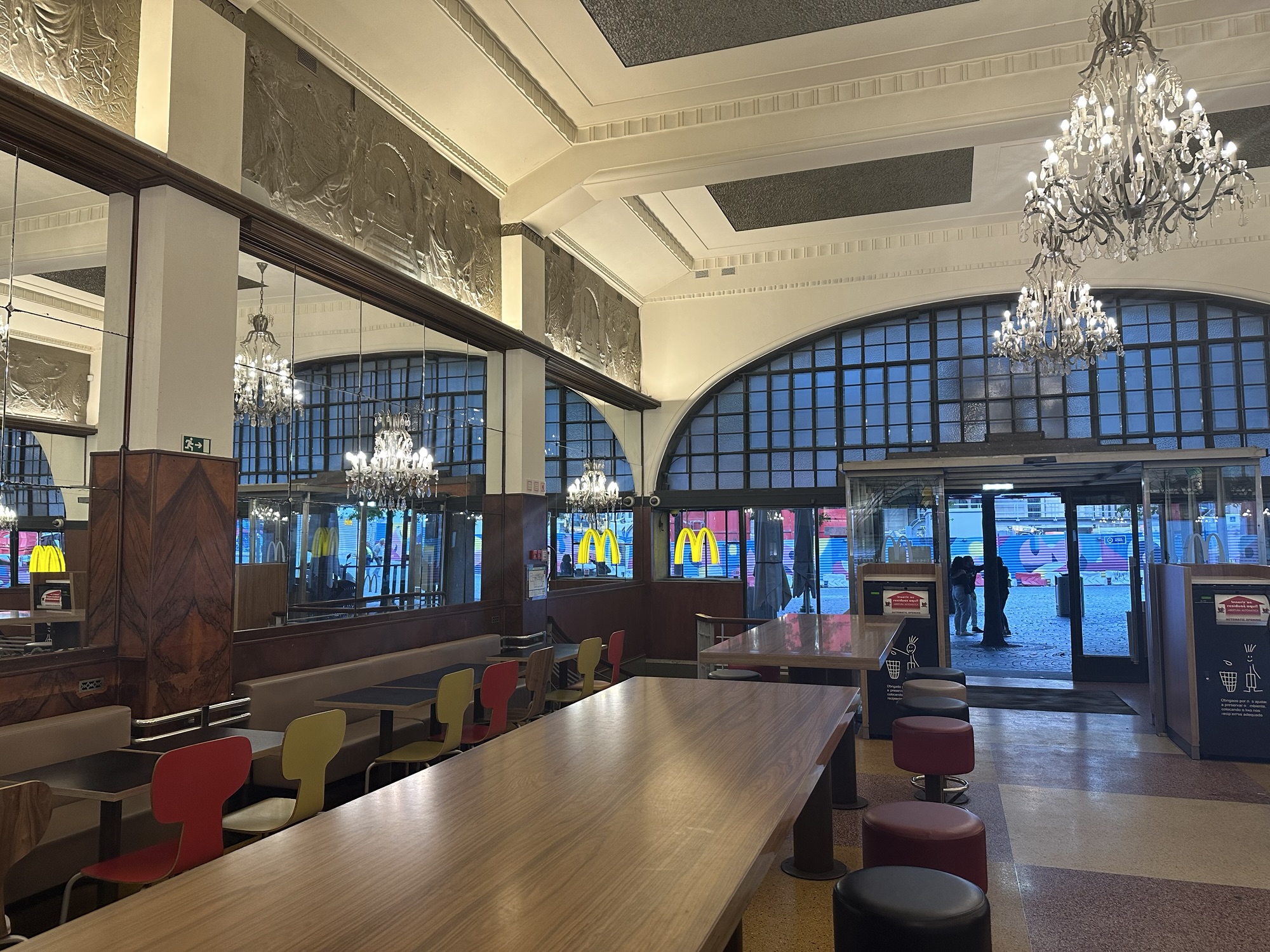
    One of the best McDonald’s restaurants I ever visited was by the train station in Porto, Portugal. The building is designated as historical, so the chain was not allowed to remove a lot of the decor. What decor might that be? Stained glass and chandeliers!

    My friend and I made a few return visits to what we lovingly called “Fancy McDonald’s.” Not only was it a neat atmosphere, but my friend is a vegetarian and they had several options in Portugal. We learned on our walking tour that week that Portugal actually serves vegetable soup even at fast food chains because it’s tradition to have that before a meal in Portuguese culture.

    Visit a local grocery store

    Another thing I like to do when visiting a new country is making a trip to a grocery store. Sometimes it’s just going to a convenience store, like one of the many 7/11s I went to in Tokyo. Other times, I’ve stumbled across a regular marketplace. I often want to have snacks for the room or for day tours, and what better place is there to find those? Rather than going for my home favorites, however, I try to find at least a couple of snacks from that country.

    Sometimes, though, it’s fun to see the names of snacks back home, in the place I’ve landed. For example, did you know that Cool Ranch Doritos are known as “Cool American” in Iceland? Some home favorites also have unique flavors in different places, like the jamon chips I tried in Spain.

    Visit a small coffee shop or cafe

    If you’re like me, you find joy in a good cup of coffee. In addition to the coffee itself, I love to find a place with a good atmosphere. That is why I love to find a cafe to sit back at if I have down time on a trip.

    I can tell you of a lot of good places I’ve had good coffee – Latin America and Italy being two of those places of course. My go-to way to find the best is by asking locals. That’s how I found Three Monkeys coffee in Cusco, Peru and SO Coffee Roasters in Porto, Portugal.

    I have also, however, found some really wonderful shops by wandering by and stopping in. A favorite traveling experience of mine was when a friend and I did just that while waiting for a tour in Cardiff, Wales. Since it was an early morning, we stopped in a shop called The Bike Lock near the meeting point. We got chatting with the gentleman behind the bar, who told us all about the local sourcing they do and the shop’s community involvement. I immediately gave them a follow on Instagram and shared with other friends that were going to visit the area. My friend and I rather enjoyed not just the coffee, food, and people watching, but the story behind the spot.

    Take a walking tour

    A lot of people likely prefer that their tours be for specific sites at their destination. I used to also believe this – if I wanted a tour, it was going to be TO somewhere. However, I’ve more recently started enjoying walking tours on a lot of my travels. An added perk is that they’re usually relatively low in cost. I’ve even found a few that you can receive for a suggested donation!

    All of the group tours I’ve taken usually have an orientation tour upon arrival. I’ve often learn more about the cities I’m in on some of these walks than I would have on my own.

    Pre-Booked Walking Tours

    I’ve also pre-booked walking tours on trips I’ve planned on my own. One of my favorite tours I took was through Airbnb experience in Porto, Portugal. We walked all around the city and saw touristy sites, but also learned about some lesser-known parts of the city. At the end of the tour, we received a picnic lunch that we could enjoy there or take to go.

    Often, you can find a themed walking tour depending on the city. In Edinburgh, Scotland, a friend and I took a tour inspired by the wizarding world of Harry Potter. Since we were broke college kids abroad, this one was especially nice as it was donation-based. I’ve also seen advertisements for (and plan on doing in the future) a Jack the Ripper walking tour in London.

    If you have some free time, or plan to do some solo exploring, I highly recommend taking a walking tour. You never know what you might find, or what your local guide may recommend!

  • Pros and Cons of Solo Traveling

    Pros and Cons of Solo Traveling

    What nobody tells you about traveling on your own

    I love my friends and family, and have taken many trips with them throughout the years. After a particularly rough breakup, however, I started to do more things on my own. That’s when I started to take some solo trips.

    When most people hear that I travel solo, I often hear “you’re so brave for doing that!” and similar comments. The truth is, sometimes I agree; other times I feel like that sentiment couldn’t be further from the truth. Solo traveling has been both freeing and lonely, exciting and scary, and everything in between. If you haven’t done it before, I encourage you to try it out. I’ve put together some thoughts on my experience with solo trips. I’m hoping it helps you out, whether by providing advice, motivation, or community.

    selfie of author on a solo trip to Madeira

    Traveling solo can be lonely.

    One thing I’ve struggled with the most is that I often miss having someone to share that moment with. It can be hard to walk into a restaurantwhere others may not even share your language, and know you’ll be dining alone. I often turn in for the night wishing I had someone to recap the day with. So yes, traveling solo can be lonely. But guess what? That’s okay to feel. As much as I try to call home, it’s not always possible. Something that has helped me with that need to share is that I get myself a postcard from my destination. I then write about some of the best parts and mail it to myself to reflect on later as well.

    Solo travel = doing what YOU want.

    How many times have you gone on a trip and passed up on something you wanted to do in favor of the group’s plans? The thing I love the most about solo travel is that I can choose my own adventure. Sometimes that thing is as simple as going to a museum for an exhibit I wanted to see. For example, I went to London’s Museum of Natural History solely for their David Attenborough virtual reality experience. My friend I was traveling with wasn’t interested, but I made it a solo experience.

    I’ve also learned that I love to find a quiet place and just read. I now enjoy dinners alone a lot of the time. When I took a solo cruise, I made it through more books than ever just by taking them to dinner with me.

    Sometimes my solo travel plans are more active. On my solo trip to Portugal, I flew to Madeira and did a sunrise hike. In Mexico, I joined a tour to explore the Rio Secreto, something some of my usual travel partners wouldn’t have wanted to do.

    Making friends is possible on a solo trip

    I have often by surprised by the kindness of strangers when I’m traveling on my own. Most people are willing to share in their day in little ways like a smile or a brief conversation. Traveling solo has been a great way for me to come out of my shell and meet new people.

    I can recall several times where speaking to someone while on an activity alone led to future encounters and lifelong friends. One particular moment that comes to mind is when I went on a wine tour from Porto to the Duoro Valley. There ended up being several people on the tour around my age and we exchanged numbers. Later on in my trip, I met up with a few of them for brunch at a place they’d heard of but I hadn’t known about. It was delicious, and a great way to have a little company!

    Solo traveling doesn’t have to mean being alone.

    Just because you don’t know anyone wanting to travel doesn’t mean you have to stay home, or be completely alone! Group travel is a great solution for first-time solo travelers or those that prefer a mix of company and time alone.

    Back in February 2024, I took a trip to Belize and Guatemala with a tour group. Going into it, I knew nobody – I was on my own in picking the trip and taking my flights. I ended up making several friends who I’ve now visited and/or taken trips with since then.

    Depending on the trip, there’s sometimes also gatherings for solo travelers. On my solo cruise in January 2025, I received an invite to a solo traveler meetup the evening we left. I made friends at that gathering that I was able to message and invite to trivia and other activities on the ship throughout the week.

    Author and friend on "Belize" sign

    Solo trips can be expensive.

    It’s really great to pick where you want to stay, and what you want to do. I especially love having a place to get some quiet time between active parts of my trip. That being said, costs of traveling alone can certainly add up. Unless you’re going with a company that pairs you with a roommate, you’re covering the full cost of accommodation on your own. Even if you want a solo room on a group trip, there’s often a single supplement. Some tours are made for a minimum number of people. Sometimes you’re on your own with paying for rental cars and other transportation. If you want to travel on your own, it’s best to be able to budget and prioritize expenses. You may also want to consider shared spaces like hostels if that’s something you’re comfortable with.

    Safety is extra important to keep top of mind.

    Yes, you should always be aware of your surroundings and do your best to travel safely. Being on your own makes you even more mindful of how to remain safe. I always travel with my personal items in a secure bag on my front. For private hotel rooms, especially in some unfamiliar destinations, I have a portable door lock like this one. Try to avoid telling people you’re on your own, especially in taxis and rideshares. If someone asks, I usually tell them I have people I’m meeting up with or take a phone call to show I have others that know where I am. Don’t give your room number at a loud volume when interacting with hotel/hostel staff. Know the emergency lines of your destination, and the best practices for things like taking a taxi alone.

    Should I travel alone?

    Overall, traveling alone is something I have learned to really love. Whether it’s a full trip on my own, or scheduling days on a shared trip to have some time with myself doing the things I care about, solo travel is a rewarding experience. It’s completely valid to be anxious or scared to take that solo trip. It can be expensive, and at times lonely. In my opinion, the pros far outweigh the cons. Start small if needed with a weekend trip or going alone on a group tour but take that solo trip!

  • Top Five Packing Essentials for International Travel

    Top Five Packing Essentials for International Travel

    What to pack for your international trip

    If you’re a chronic over-packer like myself, it can be difficult to determine what you’ll need for your trip. Regardless of your destination, take a look at my list of my top 5 packing essentials below for an idea of where to get started. For even more ideas, I have a full packing list in my Pre-Travel Checklist blog.

    Suitcase with luggage tag

    Note: Some of the products links are affiliate links. As an Amazon Associate I earn from qualifying purchases.

    1. A Power Bank/Back Up Battery (or two):

    I never go anywhere without at least one backup battery. I’ve found myself one two many times with a dying phone, needing to find my way home or back to a hotel. The last thing you need at 1 am on a foreign street is a phone at 1% and no way to charge it to get you home! I have a few different banks that I use, but one of my favorites is a fast-charging Anker power bank such as this one.

    2. A filtered water bottle

    While I purchased my filtered water bottle specifically for a trip to Belize after hearing about potential water bacteria, I’ve started bringing it on even my domestic travels. As someone with a sensitive stomach, I always find it better to be safe than sorry. My go-to bottle is a LifeStraw bottle. During my research of different filters, I found LifeStraw to filter more microorganisms than a brand such as Brita. I also like that the Go series has a carabiner clip to easily hook on my backpack.

    After the allotted amount of use, it’s also easy to swap out the filter with their replacement filters..

    3. Packing cubes

    One thing I swear by is my compression packing cubes. While they may not save as much space as some creators make them out to, I’ve found that at minimum they allow me to stay organized with my packing. I often will pack each cube with that day’s planned outfit, and then squeeze out the extra air. These are especially useful on my trips where I have limited baggage, like taking the train to Machu Picchu!

    4. Multi-Port charging block

    Even at home, I like to simplify my charging organization. Rather than use one brick per device, I use a brick with multiple USB and USB-C ports. Specifically, I use this fast charging brick. This allows me to charge my phone, watch, portable chargers, etc. all in one outlet.

    I’ve also found similar bricks for different countries’ outlets, such as this EU brick, or this UK brick.

    5. Outlet Adapter

    Even with a multi-port block, you may want to bring an adapter, depending on your destination. I like to use one that has a USB and USB-C port in addition to a universal outlet, like this one. That way, I have some additional space for items requiring cords, and can use tools like my dual voltage hair straightening brush or plug in my camera battery. Always check your destination’s outlet type and whether a power converter is required in addition to an outlet adapter. That being said, a universal adapter is something I always have on hand for my international travels.

    Honorable Mention: A packable backpack.

    There are days that I’m going on an all-day tour or even just to the beach, where I don’t want to have to empty my carry-on to pack up for the day. I also don’t want to take up too much space; for this, my stowable backpack is perfect! It is lightweight, water resistant, and easily folds into a small cube for easy packing. Bonus: This also helps if I end up needing an extra bag for souvenirs on the way home.

    Pile of luggage, including packable backpack

    Follow for more travel and packing advice!

    If you found this helpful, follow along for more tips on prepping and packing for your international trips. Whether you’re new to global travel or a seasoned pro, check out my other blogs and subscribe. Let’s learn together!