Tag: Travel planning

  • Four Day Safari in Tanzania

    Four Day Safari in Tanzania

    Take a peek at what a four-day safari in Tanzania is like, during the month of February.

    Recently, I had the incredible opportunity to go on a safari in Tanzania. This has always been a dream trip of my mom’s, so she and my grandmother tagged along as well. Keep reading for insights into what this was like – from planning to travel and everything in between!

    Booking a Safari in Tanzania

    Picking a time of year for your Tanzanian Safari

    There are multiple factors to consider when deciding what time of year you want to go on your safari:

    • Busy season vs slow season
    • Wet or Green Season vs Dry Season
    • Associated costs & availability

    For our safari in Tanzania, we wanted to pick an affordable option that also worked with my mom’s teaching schedule. While she has summers off, that’s a busier time of year for safaris in Tanzania. Therefore, associated costs are often higher (and temps are as well!). Instead, we opted to go over her school break in February. Added bonus: February is calving season in the Serengeti! Though we were concerned at first about weather, the rainy evenings made for a lot of greenery and beautiful landscapes. Overall, we stayed pretty dry in our safari vehicles as well.

    Zebras on green landscape from safari in Tanzania

    Picking a Tour Group

    When it came to picking a tour company for our safari in Tanzania, we had a few elements to consider. Cost, availability, group size, and sustainability were some of the top factors.

    After requesting proposals from multiple companies, we ended up booking with Tanzania-Experience. They offer several options for lodge, camping, and luxury safaris; we booked the Impressive Tanzania small group safari. We loved that this was an “everyone gets a window seat” experience. It fit the timeframe we needed, and the planning process was also very simple. We were even able to change the booking type to triple occupancy, add on a stay upon arrival, and book a balloon safari!

    One other element I want to emphasize is Africa Experience’s commitment to sustainability. I wanted to be sure whatever company we chose was as ethical as possible not just with wildlife interactions, but community and environmental impact. Even the lodges and camps selected each had their own policies and practices.

    Preparing for your Safari in Tanzania

    Flights & Transfers

    Once we arrived in Tanzania, all travel was included in our itinerary. But how did we get there? Honestly, this was one of the pricier matters to handle – and we regret going with a cheaper option.

    We booked our flights through Priceline, which I would not recommend. Not even two weeks before the trip, my mom’s flights disappeared not once, or twice, but four times. Hours on the phone later, we were able to get her checked into the second and third leg of the flight. Unfortunately, we arrived at the airport to check in for our commuter flight and… her ticket was voided. We are still fighting with Priceline on this as we had to buy a new ticket to JFK.

    Immigration and Visas

    This part of preparation is going to differ for everyone depending on citizenship and passports. My best advice is to look at your governing body’s site, as well as the official Tanzania immigration site. Most travelers will require a visa of some kind; U.S. passport holders at the time of this article require a Multiple Entry Visa. We opted to apply upon arrival as we were all a bit confused on what we needed. That being said, it was a simple process upon arrival. You wait in different lines for application, payment, and confirmation, before you’re able to go through to baggage claim. Questions for our group were pretty standard – how long we’d be there, why were traveling, etc.

    Packing for your Safari

    I’ll write a separate blog on this one to dive deep. For more information on what I packed (and what I actually used), check out my mini series over on Facebook or Instagram!

    Safari Parks in Tanzania

    There are any number of parks one might visit on a safari in Tanzania. Our itinerary covered Tarangire National Park, Serengeti National Park, and Ngorongoro Crater.

    Day 1: Tarangire National Park

    Day one of our safari in Tanzania started with a pickup at the lodge and meeting the rest of our small group. We then set off for Tarangire National Park. Upon arrival, we checked in and had a picnic lunch before our first game drive of the trip.

    Known for its large elephant herds and baobab trees, this park was the perfect introduction to game drives. One of my favorite memories from this entire trip was in this park. Our vehicle pulled over to the side of the pathway to observe a group of elephants grazing. Next thing we knew, the group was on the move, fully surrounding the vehicle, so close I could have touched them (but didn’t!).

    We also saw some of the other wildlife Tanzania is famous for, including marabou storks, Maasai giraffes, zebras, lions, and warthogs. Fun fact: the name of the park can be traced back to/correlated with the term “River of Warthogs.” This comes from the Mbugwe language.

    This park has some man-made elements as well, such as a large watering hole, where we concluded our game drive. We got lucky again that the watering hold had visitors – another herd of elephants! We watched the babies splash around for a while before heading back to the park entrance.

    Day 2-3: Serengeti National Park

    A main reason we chose Tanzania for our safari destination was Serengeti National Park. An avid fan of nature documentaries, I wasn’t going on a safari without seeing it for myself (as well as seeing the Great Migration!). Our itinerary allowed for two days and two nights here, which was perfect.

    The first day in the park, our group got incredibly lucky. After driving several hours to get to the park, we were excited to get started on a game drive. We were met with hundreds of wildebeests and zebras, as well as two types of gazelles. One fun fact about planning a safari in Tanzania is that you can always see the Great Migration at Serengeti NP – you just have to be in the right region of the park for that time of year.

    After a bit of a drive, our guide received some communication for other vehicles – but we did not know what for. We were in luck! There was a leopard spotting! We got to see not just one, but three leopards that day, which is incredibly rare according to our guide.

    Our second day (and drive) we saw even more animals, including a cheetah family and several hyenas with their young. On this day, we learned that hyenas will hide their food in water to avoid other predators and scavengers finding it. We also saw a handful of large male lions – full manes and all!

    Serengeti Balloon Safari

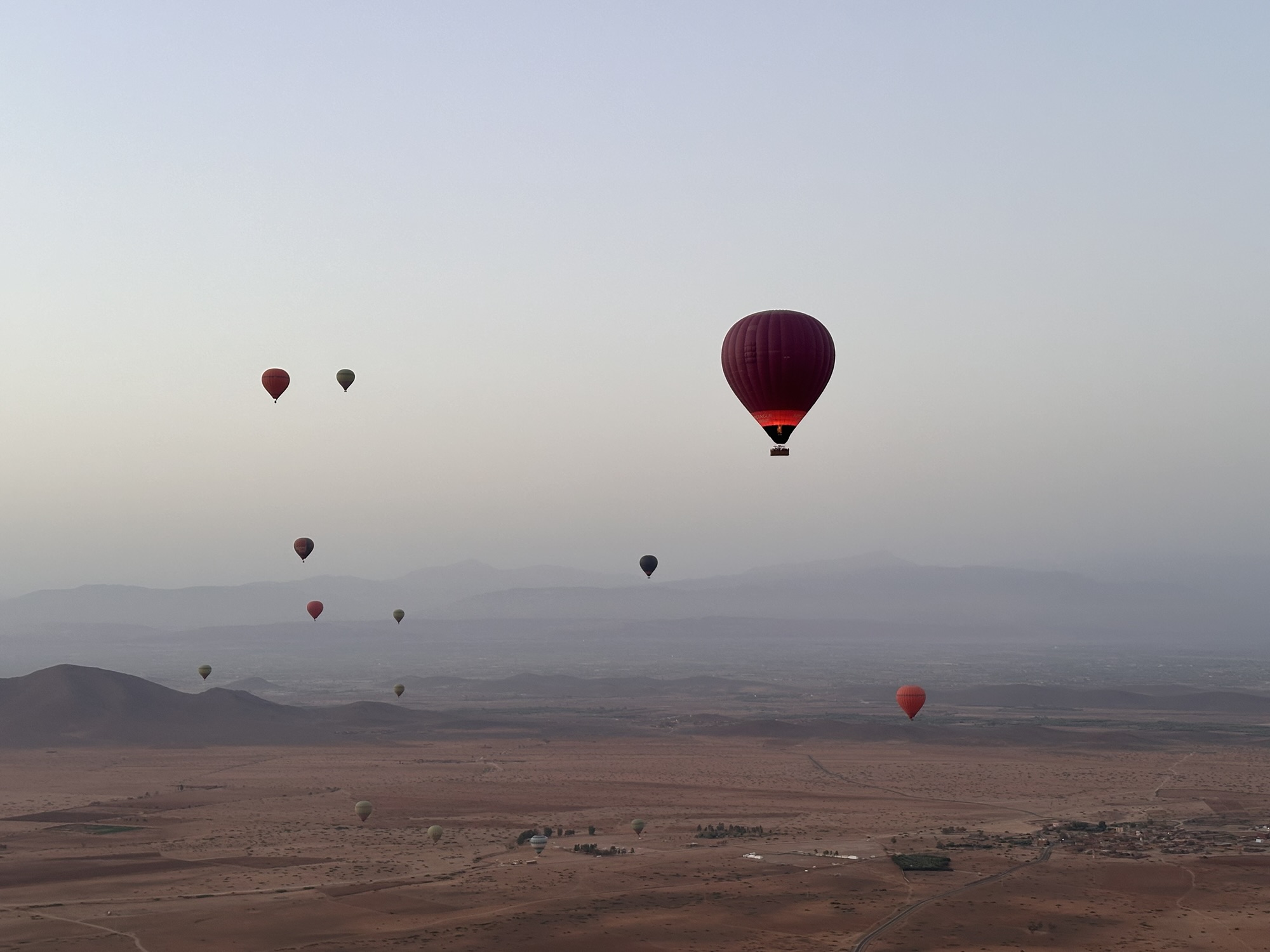
    A true highlight of our time in the Serengeti was a sunrise balloon safari. Our tour company was able to arrange this for us, and the company booked with was Serengeti Balloon Safaris. This was an inCREDIBLE experience that I would recommend to anyone. Seeing the animals from the ground is already amazing, but from the sky? Incomparable. Seeing the migration especially from the air really gave some perspective into how large this natural event really is.

    After the flight, we toasted some champagne in the bush to celebrate. Our drivers from that morning picked us up and brought us to another location in the bush to have breakfast (which was delicious) before bringing us to meet up with our group again. If you’re booking a safari in Tanzania, and can afford the splurge, you can’t miss this experience.

    (Note: this is not a sponsored review, I just truly loved it that much).

    Mobile Camping in the Serengeti

    Another highlight of this particular Tanzanian safari was getting to mobile camp in the Serengeti. While the other stays of the safari were at lodges, this was a campsite that changes location based on Great Migration patterns and location. If you’re not a big camper – don’t worry. This “camp” was in tents, but it had most modern luxuries as well – including real beds, wifi, and a working toilet in the tent. One bit of advice, however: bring bath wipes. There’s a bucket shower, but you’ll probably want to wipe off some dust still!

    This particular experience was a highlight to me due to the fact that we were sleeping actually inside the park. We not only heard lions and hyenas (did you know they sound like birds?) calling through the night, but we even had a giraffe run through our camp! Not only that, but upon entering the site, we saw a trio of lions laying in the path to our camp. Talk about amazing!

    As with other elements of this safari, the camp has an eco-friendly approach, which I also appreciated. If you’re booking on your own (or if you’re looking at tours!) check out Ndutu Kati Kati Tented Camp for your Serengeti stay. On top of all I’ve already said, the hospitality was next level, with the cook going so far as to make my mom a special meal on night two because she’d complimented the dish on night one. Highly recommend it!

    Day 4: Ngorongoro Crater

    The final park visited on our safari in Tanzania was Ngorongoro Crater. Honestly, this was one of my favorite parks, if for no other reason than the scenery. Going in February after the rains really brought out the natural beauty of the area.

    This park is located in Ngorongoro Conservation area, which we’d actually stopped in en route to the Serengeti on day two. We all felt the lookout that day was beautiful – it didn’t even compare to being in the crater area itself.

    Technically a caldera rather than a crater, this area was once as high as Kilimanjaro. Now, it’s home to any number of species – including two species of flamingos, hippos, black rhinos, and the Cape buffalo. We also got to see a number of baby lions, more hyenas, and even a jackal stalking a feasting pride of lions to steal some prey.

    Safari in Tanzania: A Summary

    Overall, I could not recommend a safari in Tanzania enough. Depending on what you’re hoping to see, I also think that February is a great time to go and save on cost as well. That being said, a few things to note are:

    • There are no sighting guarantees.
      • My group was incredibly fortunate to see every animal we hoped for. That will not always be the case, and that’s important to remember.
    • Short stays are great – longer stays are better!
      • For how much time we spent traveling to and from Tanzania, I do wish we had tacked on a few days on either end of the safari itself. I would have loved to see more of Arusha, or even taken a trip to Zanzibar to unwind after all the time in the car.
    • Choose your tour wisely
      • You shouldn’t need to spend a fortune on your safari. That being said, there may be a reason for lower (or higher) costs. Do your own research into why some will cost more or less than others. It could be expected weather and slow season, but it could also be an issue with quality or sustainability.
    • Be mindful of the travel
      • Something that isn’t always talked about is how much time is spent inside the safari vehicle. While the vehicle itself was rather comfortable with the company we went with, you know your body best. Be prepared with anti-motion sickness meds, and be ready for some rough roads.

    Are you looking to book your safari in Tanzania? Check out my socials for even more insight into my recent trip!

  • Things to do in Belize

    Things to do in Belize

    Highlights of Belize in February

    Note: Product links in this article. As an Amazon affiliate I may earn a commission from qualified purchases from these links at no added cost to the user.

    Best things to do Near Belize City

    Belize City is home to the main international airport of Belize and therefore likely where you’ll start your trip. While where we stayed, the Belize Biltmore Plaza, was a nice hotel, we didn’t stay in the area for long. Truthfully, the city wasn’t very walkable and we’d heard information that it’s not the safest part of the country. That being said, it was a great jumping off point for my trip!

    A pro tip for arrival if you like alcoholic beverages: buying bottles is expensive on the mainland, so try to shop for anything you may need in the duty free section of the airport before you hit the road.

    Altun Ha Ruins

    On our first travel day we visited Altun Ha, one of many Mayan ruin sites in Belize. Learning about the Mayan history is one of the best things to do in Belize, in my opinion. We were given a guided tour of the grounds and learned about the Maya culture. After the tour, we were given some free time to explore some of the ruins, including climbing to the top of one of the temples.

    A majority of the site has not been excavated, with over 500 mounds existing on the property. The mounds are structures overgrown with grass that to most would appear as hills. A small museum is also on the grounds, with depictions of items that were found during initial excavation. If you’re looking for local gifts, there are also small stalls set up near the grounds. I brought home some coffee for a friend that she loved!

    Belize Zoo

    Around 45 minutes outside of Belize City is the Belize Zoo. Our tour director was able to arrange a stop here on one of our travel days. What’s unique about this zoo is that it houses animals found throughout Belize itself. Additionally, the animals housed there are rescues from the country or confiscations from the illegal wildlife trade. Some are also brought in from other rehabilitation and zoological centers. The animals kept there cannot be released for one reason or another, and so the zoo cares for them.

    The zoo’s focus is on education and conservation of Belize’s wildlife. It’s a great place to spot some of the more elusive and endangered animals, such as the jaguar and tapir. The exposure to these species helps promote their conservation with the general public.

    Best Things to do in Belize: San Pedro & Ambergris Caye

    From Belize City, we took the ferry to San Pedro. The trip is around an hour and a half, and can be a bit cramped and bumpy so bring your motion sickness meds if that’s an issue! I opted to sit on the top level and the airflow definitely helped. Unfortunately, there were some folks that got sick on the bottom level so be mindful of that. With that said, the trip lands you on the island of Ambergris Caye, the largest coral island in Belize. There, your main transit is walking, taxis or golf carts. If the island vibe is your thing, this is the place to be.

    Snorkeling at Hol Chan

    Hol Chan Marine Reserve is a barrier reef located off of Ambergris Caye in San Pedro, Belize. It is known to be one of the best areas for snorkeling and spotting marine life in the area. Unfortunately for us, we had bad weather the day we were scheduled to go. According to our guides, this mean being unable to go to the “best part” of the reef. Due to the roughness of the water that day and some inexperienced swimmers, most groups stayed close to the boat and saw only common reef fish. However, other groups that ventured further out saw turtles and rays! I would definitely revisit this area in better weather to give it another go.

    Secret Beach

    After snorkeling, our group was given the option to go tubing or to Secret Beach. I opted to go to Secret Beach and, honestly, would not recommend it. It’s especially not worth it, in my opinion, if the water is rough or the weather is bad. Because of the weather, the only real option was to go to a bar. We had some fun, until group members were harassed, at which point we decided to sit in the bad weather and wait for the rest of our group. This is not something I’d add to a return itinerary.

    Take a food tour

    An optional thing to do on my Belize tour was a food tour in San Pedro. As someone that loves trying new foods while traveling (especially Central and Latin American cuisine) I was all about this! Something that’s interesting about San Pedro specifically is that there is a blend of a variety of cultures. This leads to a variety of foods as well.

    Our food tour began with drinks and a few snack items. We, of course, had a rum punch. The first bites were of Jamaican influenced food: a conch fritter and jerk chicken at Jambel Jerk Pit. Had we had another night in San Pedro, I definitely would’ve been back for dinner!

    We then moved on to sample some tostadas, which were of course delicious! My favorite stop, however, was next, where we had homemade pupusas. We had the option of a variety of flavors, from simple cheese to pumpkin. These were a fan favorite, and many members of the group ordered more to go.

    Our tour naturally concluded with dessert – ice cream! We ended up at a shop with so many flavors to choose from. As a dairy-challenged individual, I selected a mango sorbet. But I’ll be honest, I did try a sample of a local staple, soursop. This is a tangy, tropical fruit that our group compared to a range of flavors like pineapple, strawberry, or apple. It’s definitely something to try yourself!

    Belize Food Bonus: Try Gibnut!

    While we tried this dish outside of our food tour, one unique thing to try in Belize is gibnut, or the “royal rat.” This dish comes in a few different forms, but we tried it stewed in a delicious sauce. It’s dubbed the “royal rat” because of the late Queen Elizabeth II’s affinity for eating it when visiting Belize. You can read more about this and other dishes I’ve tried while traveling in my blog “Eating Like a Local!”

    San Ignacio

    Tikal National Park – Guatemala

    Okay, okay. Tikal National Park is actually in Guatemala. However, it was still part of my trip to Belize and I couldn’t possibly write this without bringing it up. If you like history, wildlife, and greenery, this is your place.

    We started the morning by crossing the border – don’t forget your passports! We met up with our tour guide and transit for the day and drove to the park.

    Into the Jungle

    Unfortunately, I missed a big chunk of the park due to breaking my ankle the night before. (Yes, this happened. You can read all about it here.) While I rode to the main site in a wagon, my tripmates took a short trek through the jungle of the park.

    After a brief introduction to the history of the site, we were given the opportunity to explore the structures. This included being able to climb up to the top of Temple IV (with the help of a staircase). Fun fact: in addition to its Mayan history, Tikal was used for filming “Star Wars Episode IV: A New Hope.”

    After exploring the ruins, we took a guided walk back through parts of the jungle to go have lunch on site. Along the way, our guides told us of some of the wildlife they’ve encountered, such as and jaguars and over 285 recorded species of birds. We saw many birds, spider and howler monkeys, and of course coatimundi.

    Parting with our guides back at the border, we finished the night back in Belize at our hotel in San Ignacio.

    Cacao farm tour & chocolate making at Che’il Mayan Chocolate

    On one of our other travel days, the group opted to take a tour of a chocolate farm and learn how the Maya produced the sweet. We received a tour of the trees where cacao is grown and a lesson on its harvest. The guide even gave us the opportunity to try the fruit of the cacao tree! Following the tour, we had a homemade lunch and a chocolate lesson. Each person was given the opportunity to grind the chocolate, and we all received a sample at the end. Fun fact: the metate, or stone, we used to grind the chocolate has been in the family here for over a century!

    Things to do on the Southern Coast, Belize

    Cave Tubing

    If you’re an outdoor and nature lover, this is the activity for you. En route to San Ignacio, our group went cave tubing. This isn’t as action packed as you may think, but more of a (mostly) leisurely float down the river and through part of a jungle cave system.

    To start off, we were given a chance to swim and “cliff” jump at the mouth of one of the caves. We then set off on our journey, linked together in our tubes. Sadly, I don’t have as much footage as I would’ve liked due to a dying GoPro (oops! Lesson learned).

    In the caves, we learned about the formations and how they were created. We also floated by a waterfall within the cave system, which was something I hadn’t seen before. The remainder of the experience was spent floating through the jungle, taking in the greenery.

    Pro tip: Try to coordinate this experience around cruise ship arrivals. Cave tubing is one of the top things to do on a Belizean cruise stop, and the site gets crowded fast. Our director was able to rearrange our schedule to avoid the crowds when he learned of the cruise schedule and we more or less had the area to ourselves. I’d highly recommend it!

    Ziplining

    For the adventure enthusiasts, one of the best things to do in Belize is go ziplining in the jungle. This was my first time going and I loved it. The guides and safety equipment were more than up to standard, and the views were incredible. If you’ve never been, no worries – the course gradually made its way from short, easy lines to a longer line over the river.

    I’d suggest bringing an action camera like a Go-Pro, as I got some great footage of the scenery and even the guides doing tricks. I’d borrowed an older model from a family member, but now own the Hero12 and have taken it on several trips since. There are some helmets already equipped with a clip mount, so you don’t need to worry about the harness or lines interfering.

    Snorkeling in the Southern Cayes

    Our second snorkeling excursion had much better weather and calmer waters. We had the option to go snorkeling in the Southern Cayes, which I’d recommend to anyone. We more or less drifted along through comb jellies (no stingers!) in water with huge starfish and rays. Our guides even pointed out a scorpionfish, and allowed us to dive if we chose to. If you’re looking for things to do in Belize that are outdoors but still pretty relaxed, this is the best option in my opinion. Of the two opportunities, this was some of the best snorkeling in Belize.

    Garifuna drum lesson

    If you’re interested in culture and music, the one thing I’d recommend you do in Belize is learn about Garifuna drumming. I was fortunate that our tour director with EF arranged for local Garifuna drummers to teach us a lesson on the beach of our last hotel. They not only taught us the history, but we all had the chance to play with the group. The night ended with dancing under the stars (I sat out some of that due to aforementioned broken ankle…). Honestly, this was one of my favorite experiences I had in Belize.

    The Best Time to Visit Belize

    My trip to Belize was in mid-late February. Our tour director informed us that this is one of the best times weather-wise to visit the country. This is after rainy season (mostly) and just before the high crowds of the dry summer season. As someone from the Northeast U.S., it also served as a break from the cold, with temperatures reaching low 80s.

    Belize Activities for Everyone

    Belize is truly one of those countries that has something to do for any and every person. Well, except ice cave explorers, I suppose. Between the food, music, history, and outdoor and island activities, you can’t go wrong. I had opted for this trip because of the ease of going with a tour group last minute. I didn’t expect to fall in love with the place, and I can’t wait to return.

    Author at Belize sign in San Pedro
  • Making Travel Affordable

    Making Travel Affordable

    Tips on how to budget for traveling

    There’s no lie to the belief that travel expenses can add up. From hotels and flights to activities and food, how do I make travel more affordable? Below are some tips for managing travel expenses and budget for trips that I like to use myself.

    Afford higher budget trips using payment plans.

    Especially when it comes to big trips, I often book with companies that allow for payment plans. One of my favorite tour companies that allows this is EF Ultimate Break. They also have a few sister companies with similar models.

    Group trip through EF Ultimate Break
    Tour Group with EF Ultimate Break

    Anything that allows me to put down a deposit and make payments along the way is a plus in my book. I’ve also put bigger expenses such as flights on payment plans through Uplift (now Flexpay) or Affirm. There is interest involved, but it’s fixed and factored into your monthly payment plan. Just make sure whatever the monthly amount is fits into your regular budget.

    Book through a tour company

    One of the other perks of traveling with a company such as EF is that they often get discounted rates. Overall, this makes their trips a more affordable option than trying to book it all yourself. They can get group rates on hotels and discounts on flights and activities. For example, the cost of five extra activities on my trip to Belize cost me the same as one of the activities would have been if booked privately. This makes group travel often a more affordable option for those big, eventful trips.

    If you’re unsure of when to book with a group or not, check out my blog on how to plan a trip on your own.

    Reserve now/pay later to make payments manageable.

    Similar to payment plans, I try to book hotels or activities that are Reserve Now, Pay Later. This allows me to keep shopping for other deals while not having to worry about losing a booking in most cases. It also gives me extra time past making the reservation to pay for it or save up. By the time the trip comes, I have either set aside the funds or paid on my own leading up to my arrival. By doing so, travel is made more affordable in the longterm.

    Use pay over time or reserve now, pay at property filters like this to make travel more affordable.

    Use credit card points to afford flights and hotels.

    Note: I am not affiliated with or sponsored by Capital One. I personally use the card and I may get a bonus from approved referrals at the link below.

    Capital One's rewards and benefits

    I currently have the Capital One Savor One card. This card gives cash back for all purchases, with the highest being dining and entertainment. I try to put most purchases on the card to accrue points that I can later use in their travel portal. My best advice if you go this route is to make sure you find a card that works for you, and only spend what you know you have the budget in your bank for. I’ve previously saved up to get a discount on plane tickets, and the points can also be used toward hotels and car rental.

    If you’re interested in applying, here is my referral link for their Savor Card: https://i.capitalone.com/J8AbdE3qX

    Many cards exist with similar cash back options. Utilize the best method for yourself, and shop responsibly.

    Equip price tracking tools to book at the most affordable times.

    Another perk of my Capital One card is that I can track flight and other travel prices through their portal. Even if I don’t book through the travel portal, I sometimes use this tracking tool to guide the best time for me to buy my tickets.

    These types of tracking tools exist on many different travel-related sites. Some other tools I use include:

    • Expedia
    • Google Flights
    • Hopper
    • Skyscanner
    Travel price tracking tool from Expedia
    Expedia’s Flight Price Tracker

    Plan your trips in advance.

    When possible, I try to plan trips as far in advance as possible. This goes hand in hand with my payment plans. The further out I book, the smaller the monthly or bi-weekly payments are. This also helps with being able to save up for and plan the extras for the trip itself.

    For example – each of my group trips I’ve booked over a year out. I made my deposit during Black Friday with EF Ultimate Break. They have their own payment plans, or the option to make a higher deposit and pay by a specific end date. By planning it out that far, the payments and deadline are much more manageable.

    Be flexible with your budget and plans.

    We all have our ideas of dream vacations. I love the idea of a luxury experience everywhere I go. However, I know that’s not usually a reasonable expectation. I’ve learned to be more flexible with what I want out of a trip, including where I stay.

    When I went to Portugal solo, I wanted to book with a hotel rather than a hostel for privacy. With the hotel rates, the best compromise was to book a private ensuite room in a hostel instead. This honestly ended up working out really well for me!

    I’ve also learned to be more flexible with other items – where I plan to go out to eat, balancing tours vs. solo experiences, etc. This helps manage not only expectations, but my budget as well.

    Afford expensive destinations by traveling in the shoulder seasons.

    As long as your plans don’t revolve around a specific time of year, one of the best ways to save money is by traveling during shoulder seasons. I’ve done this a few times in the last couple of years. For example, I traveled to London in April and Portugal in October. Not only do you benefit by usually having fewer crowds, you can also save money. This is especially useful in destinations that can be on the more expensive side, like parts of Europe in the summer. If you can be okay with certain weather conditions and other minor inconveniences, you can make your trip that much more affordable.

    Shop sales for the most affordable travel options.

    Like I mentioned previously, I often book my EF tours in advance and one of the best times to do that is during their Black Friday sale. They also have sales throughout the year, and will price match up to a certain time after initial booking if the cost of the tour goes down. Additionally, repeat travelers receive a new discount code after every trip!
    In addition to EF’s sales, I use email subscriptions and more to keep up with other sales. These can be sales on airlines, tours, and more. One of the best times of year to book is Travel Tuesday, a big time for discounts specifically in the travel industry. This comes the Tuesday following Black Friday, with some companies announcing deals in advance. These sales are especially useful if you have flexibility in timing or destination.

    Make extra income to put toward travel.

    While I do work full time, I also work a second job. Since I work remote, I have the privilege of being able to offer in-home pet-sitting services. For the most part, this gives me flexibility in availability and the option to say no if a job doesn’t work for me. That being said, any extra income I make goes directly into savings and/or toward travel expenses. This works notably well with my payment plans and reserve now, pay later bookings.

    Some other options I’ve had success with for more minimal extra income are selling old items on marketplace, completing surveys through Mechanical Turk, and the Amazon Affiliate program.

    Utilize partner plans to afford flights and hotels.

    If you have loyalty to particular airlines or chain hotels, I’d recommend looking into any of their partner programs. These are programs that help you earn miles and more with your preferred brand by spending other places. For example, if you fly often with Delta, you can earn miles with Uber and UberEats, as well as their SkyMiles Dining program.

    Many airlines also work as part of an alliance that allow you to earn miles for traveling with other airlines in that alliance. Be sure to register for and take advantage of the free mileage programs and add your user information to your flights. This can help you maximize your miles earned, making them more useful at an earlier timeframe than relying solely on taking flights to earn. In the long run, you can afford to travel more if you’re paying less per flight or hotel.

    Travel Can be Affordable

    There’s no one solution for affording to travel. I understand that everyone has different expenses and income. While you may not always be able to afford the “dream trip” you’ve seen online, traveling on a budget is possible. With some saving and strategy, many can afford to travel more.

  • Underrated Things to do While Traveling

    Underrated Things to do While Traveling

    Unique experiences in foreign places

    We’ve all seen the articles toting the can’t-miss experiences in new places. In fact, I’ve written my own versions of that blog. I’m all about being a good combination of traveler and tourist. Of course I’m going to see the Eiffel Tower in Paris, and I’m going to visit the Colosseum in Rome. But what are some of my favorite unique things to do in a new country? Keep reading to find out!

    International Fast Food Chains

    This one sounds silly, I’ll admit. It also sounds like one of the most American things I could imagine doing. That being said, visiting a familiar fast food chain in a new country is something I almost always try to cross off my list.

    This tradition started unintentionally. When I was doing a program through school in Italy, our hosts brought us through a McDonald’s while on a road trip. My friends and I realized that Italy’s version had different flurry flavors than ours We then started digging into more unique foods within the food chain.

    As it turns out, a lot of McDonald’s (and other fast food chains) in countries outside the U.S. have their own unique menu items. Even if I don’t eat a full meal, I make it a point to stop into one if I’m passing by. It seems I’m not alone in this, as my group tour in Morocco included an impromptu visit to a Moroccan McDonald’s to try their menu as well after much prompting by my fellow travelers.

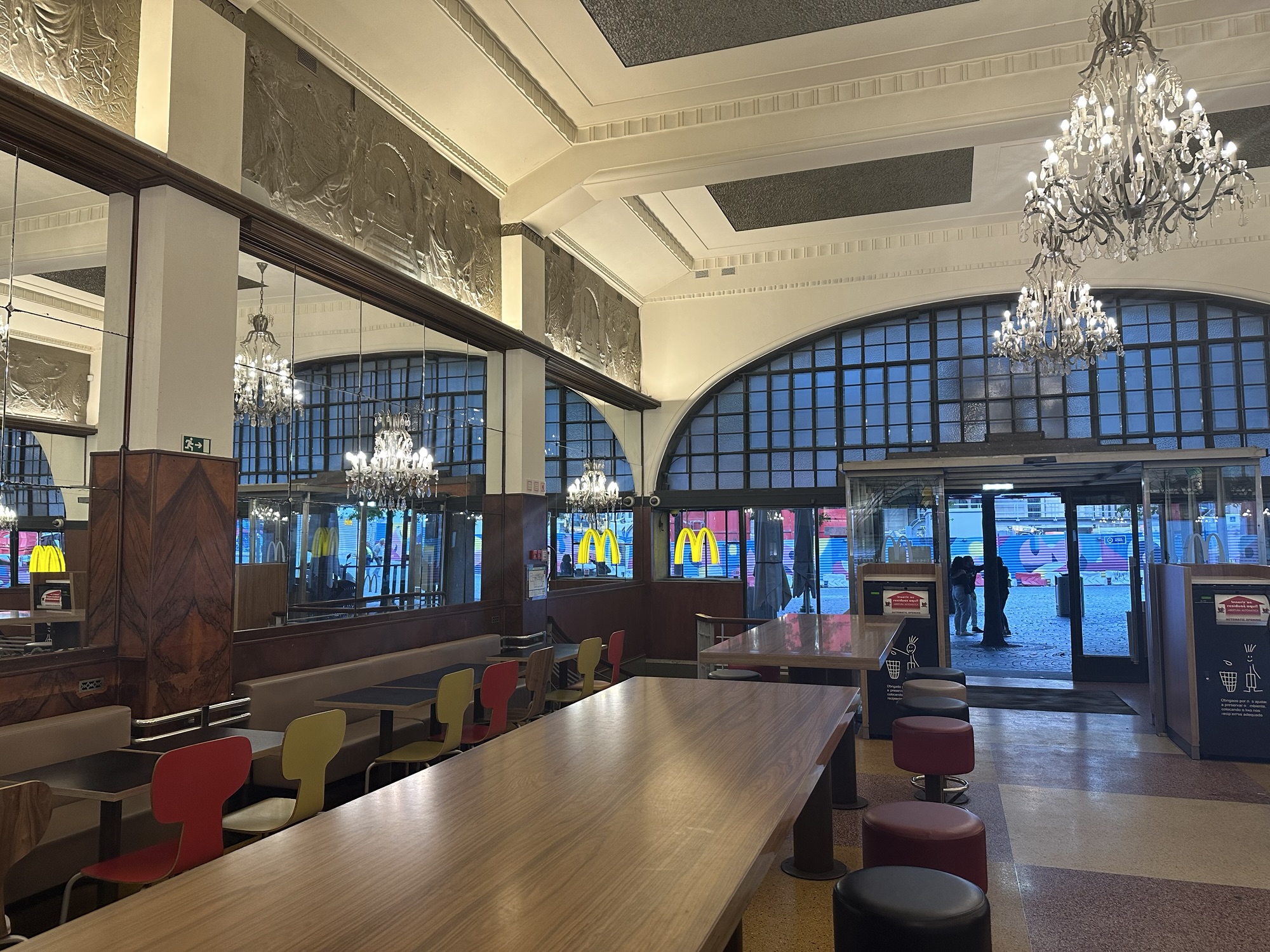
    “Fancy McDonald’s” of Porto, Portugal

    One of the best McDonald’s restaurants I ever visited was by the train station in Porto, Portugal. The building is designated as historical, so the chain was not allowed to remove a lot of the decor. What decor might that be? Stained glass and chandeliers!

    My friend and I made a few return visits to what we lovingly called “Fancy McDonald’s.” Not only was it a neat atmosphere, but my friend is a vegetarian and they had several options in Portugal. We learned on our walking tour that week that Portugal actually serves vegetable soup even at fast food chains because it’s tradition to have that before a meal in Portuguese culture.

    Visit a local grocery store

    Another thing I like to do when visiting a new country is making a trip to a grocery store. Sometimes it’s just going to a convenience store, like one of the many 7/11s I went to in Tokyo. Other times, I’ve stumbled across a regular marketplace. I often want to have snacks for the room or for day tours, and what better place is there to find those? Rather than going for my home favorites, however, I try to find at least a couple of snacks from that country.

    Sometimes, though, it’s fun to see the names of snacks back home, in the place I’ve landed. For example, did you know that Cool Ranch Doritos are known as “Cool American” in Iceland? Some home favorites also have unique flavors in different places, like the jamon chips I tried in Spain.

    Visit a small coffee shop or cafe

    If you’re like me, you find joy in a good cup of coffee. In addition to the coffee itself, I love to find a place with a good atmosphere. That is why I love to find a cafe to sit back at if I have down time on a trip.

    I can tell you of a lot of good places I’ve had good coffee – Latin America and Italy being two of those places of course. My go-to way to find the best is by asking locals. That’s how I found Three Monkeys coffee in Cusco, Peru and SO Coffee Roasters in Porto, Portugal.

    I have also, however, found some really wonderful shops by wandering by and stopping in. A favorite traveling experience of mine was when a friend and I did just that while waiting for a tour in Cardiff, Wales. Since it was an early morning, we stopped in a shop called The Bike Lock near the meeting point. We got chatting with the gentleman behind the bar, who told us all about the local sourcing they do and the shop’s community involvement. I immediately gave them a follow on Instagram and shared with other friends that were going to visit the area. My friend and I rather enjoyed not just the coffee, food, and people watching, but the story behind the spot.

    Take a walking tour

    A lot of people likely prefer that their tours be for specific sites at their destination. I used to also believe this – if I wanted a tour, it was going to be TO somewhere. However, I’ve more recently started enjoying walking tours on a lot of my travels. An added perk is that they’re usually relatively low in cost. I’ve even found a few that you can receive for a suggested donation!

    All of the group tours I’ve taken usually have an orientation tour upon arrival. I’ve often learn more about the cities I’m in on some of these walks than I would have on my own.

    Pre-Booked Walking Tours

    I’ve also pre-booked walking tours on trips I’ve planned on my own. One of my favorite tours I took was through Airbnb experience in Porto, Portugal. We walked all around the city and saw touristy sites, but also learned about some lesser-known parts of the city. At the end of the tour, we received a picnic lunch that we could enjoy there or take to go.

    Often, you can find a themed walking tour depending on the city. In Edinburgh, Scotland, a friend and I took a tour inspired by the wizarding world of Harry Potter. Since we were broke college kids abroad, this one was especially nice as it was donation-based. I’ve also seen advertisements for (and plan on doing in the future) a Jack the Ripper walking tour in London.

    If you have some free time, or plan to do some solo exploring, I highly recommend taking a walking tour. You never know what you might find, or what your local guide may recommend!

  • How to Plan A Trip on Your Own

    How to Plan A Trip on Your Own

    Okay, so you want to start exploring – amazing! But now what? How do you know where to start? At a time where folks are drifting away from travel agents, let’s take a look at how to plan a trip on your own.

    Travel Planning Tips and Tricks

    Deciding Where and When to Travel

    There are several factors to consider when planning your destination and timing. Let’s take a look at some of my key considerations.

    1. Is there a specific event happening at that place/time?
      • Sometimes you’ll plan trips for an event, like going to Valencia for Las Fallas. Other times, it may be a reason to reconsider visiting at a particular time of year. Look into festivals, major sporting events, and other events at your destination for the time you’re looking to travel.
    2. How do you feel about crowds?
      • If you’re someone that does not do well with crowds, try planning your travel for the off-season of your destination.
    3. What is the weather going to be like in that location, at that time of year?
      • The weather lately can often be unpredictable. That being said, it’s also a major factor in destination planning. Ask yourself: “Is it the rainy season in Tanzania? Will the weather be unbearably hot in Italy in June? Are these things I’m willing to tolerate?” Make sure to look at past weather trends for the area you’re considering.
    4. Is it a popular time for travel?
      • Traveling around the holidays or during school breaks (at home or the destination) often means increased costs. Sometimes this is unavoidable, but is always something to consider.

    Where should I stay?

    Where to stay when traveling is typically determined by location and one’s preferences. Some things that I like to factor into my decision on where to stay are outlined below.

    1. Is public transit reliable, or is the destination otherwise walkable?
      • It’s often cheaper to stay outside of a city center, however, you need to factor in how you’ll get from place to place. I prefer to pay a little bit more to stay a reasonable distance from public transit (if that option is available). Other things to consider are whether there are things such as food, stores, etc. near where you plan to stay that are a walkable distance.
    2. Do I want a low-key or luxury place to stay? Is my budget limited?
      • Most destinations have a full range of accommodation types. For budget trips, I’ve stayed in hostels. I’ve also splurged on a night in a nice hotel here or there if I know I’ll need some added comforts.
    3. Do I want to meet new people?
      • If you’re looking to socialize, most hostels (especially in Europe) are a great place to meet people. Whether you stay in a dorm-style room or a private one, look into whether the hostel hosts events for guests. In college, I met a lot of people just by hanging out in the hostel lobby!
    4. What do others have to say about the place?
      • My biggest advice is to thoroughly read reviews across more than one platform once you’ve narrowed down some options on where to stay. Steer clear of any with few reviews, especially if they all seem perfect. People will always have something to say, so decide what matters most to you and filter the reviews to look what others have commented about those things.

    Sites for Hostel and Hotel Booking

    While booking your accommodation directly is generally best, the following are sites I’ve used to research (and sometimes book).

    • Hostelworld: I’ve used this extensively on trips throughout Europe, and even for a booking in Boston. You can apply a number of filters, from the room style (mixed-dorm, female-only, private, ensuite, etc.) to whether the location has Wi-fi or other amenities.
    • Expedia: This well-known travel site offers the option to book with them for a lower rate; just keep in mind that any changes need to go through the 3rd party and hotels cannot always honor your choices if you don’t book directly. Either way, this is a great place to check for reviews and details such as location and amenities. I personally like to use the map feature to determine where a hotel is in comparison to sites I’d like to see, and the reviews to narrow down hotel options in that area.
    • Hotels.com: Another 3rd-party site, this is also where I’ll go to read reviews on places I’m considering to stay. If booking through this site, rewards are universal for both Hotels.com and Expedia.
    • Booking.com: Yet another 3rd-party site for reviewing and booking hotels. Again, keep in mind that the logistics of actually booking through a site such as this means you can’t always go through the hotel itself for changes to your booking.

    Two women in front of Machu Picchu

    Should I Take a Tour or Plan my Own Activities?

    Some people have a hard preference of taking tours and using group travel or doing everything on their own. As I’ve visited more places, a lot of my trips tend to include a combination of both.

    Why should I take a tour?

    Logistics

    One of the main reasons I book tours or group travel is that the logistics of my plans are complex. A prime example of this was my visit to Machu Picchu. Entry times book up months in advance, and getting to the historical site involves multiple modes of travel. Having a tour operator meant that I only had to worry about arriving on time to the meeting point. If anything disrupted the trip, I was also covered by my tour operator to either rebook or refund.

    Safety

    As a female traveler, I gravitate more toward tours in areas that aren’t as safe for women/female-presenting individuals. This is especially true when traveling solo, as I often do. Traveling with a reputable tour gives some peace of mind in these areas. For example, on my trip to Morocco, our group of women had a male guide and added security personnel in the souks.

    Orientation

    If the place that I’m visiting is new to me, I like to start my trip with a walking tour. This helps orient me to the area, while learning more about the sites I’m visiting later. An added bonus is that, often, guides are happy to give recommendations off the beaten path. This has been a great way to find places to eat and coffee shops, etc. that aren’t as “touristy.”

    Best Resources for Tours and Group Travel

    Tours

    Specific destinations often have their own local tour suppliers. When looking for tours on a broader scale, I like to use the resources below.

    • Airbnb Experience: The first place I like to check for tours (especially walking tours) is Airbnb Experience. The platform allows locals to advertise their tours, giving a personal connection to the place you’re visiting. One of my favorite tours was booked in Porto through this platform.
    • GetYourGuide: If I can’t find a tour for my destination through Airbnb Experience, my next stop is GetYourGuide. One of the perks of this site is that you can often find tours that are book now/pay later and fully refundable up until a particular date. This allows for flexibility should you decide on other activities, while holding your spot.
    • Expedia: As mentioned in the accommodation section, Expedia is a 3rd-party resource for book travel-related items. One thing you can book on this site is tours.
      • Pro tip: Really look into reviews. A lot of companies offer similar tours, and some are newly added with no reviews at all. I try to avoid these due to likelihood of it either being a scam or not yet tested operationally.

    Group Travel

    • Education First: This company is a parent company of those outlined below. It originated as a way to help students travel and has since expanded.
      • EF Ultimate Break: For travelers 18-35. I’ve now taken 3 trips with this group.
        • Pros: local guides; adventure-focused; payment plans; option to include flights; great for solo travelers to make friends
          • Added pro: My first trip with EF UB was when I broke my ankle; the director handled it like a pro! I continue to book with them because of this.
        • Cons: Some itineraries have rather large groups; I much preferred the smaller groups I traveled with
      • EF Go Ahead: For a more open age range.
        • Pros: No age limitations (aside from solo minors)
        • Cons: Itineraries to the same places as EF Ultimate Break can vary greatly in activity choices; often higher prices than EF UB
      • EF Adventures: A newer branch I haven’t yet traveled with, these itineraries are activity-focused (hiking, cycling, etc.)
        • Pros: Great for those who like an active trip
        • Cons: More expensive than other branches, from what I’ve seen.
    • Local tour companies:
      • Each destination typically has its own tour companies. Depending where you go, you can find and book them online. I haven’t yet done more than a day-tour with a local company, but it’s a great way to support the economy of your destination!

    Resources for Travel Activity Planning

    • Social Media: Now often used as a search tool, I usually start my activity planning by looking up my destination on platforms like TikTok, Instagram, or Facebook. I’ll note things that look interesting to me to later research on other platforms.
    • Travel Bloggers: I know, I know. I’m a blogger plugging bloggers. The reality is, when I use search engines to find out more about activities I’m interested in, blogs can be very helpful with the realities of those destinations. I often get advice on who to book through, expected costs, and other logistics by reading bloggers’ experiences.
    • Travel Forums: In a similar vein to social media, travel forums exist all over the internet. They can be as broad as Reddit threads, or as specific as cruise line forums. I like to join groups on Facebook, for example, for a cruise line that I’m new to. People will often ask the same questions I’m looking for information on, and I can get first-hand feedback from folks that have taken those cruises. I also am part of a few different general traveling groups on Facebook, such as Girls Who Travel, where users from around the world come together to share tips and tricks on a number of destinations.

    Travel Planning Made Simple