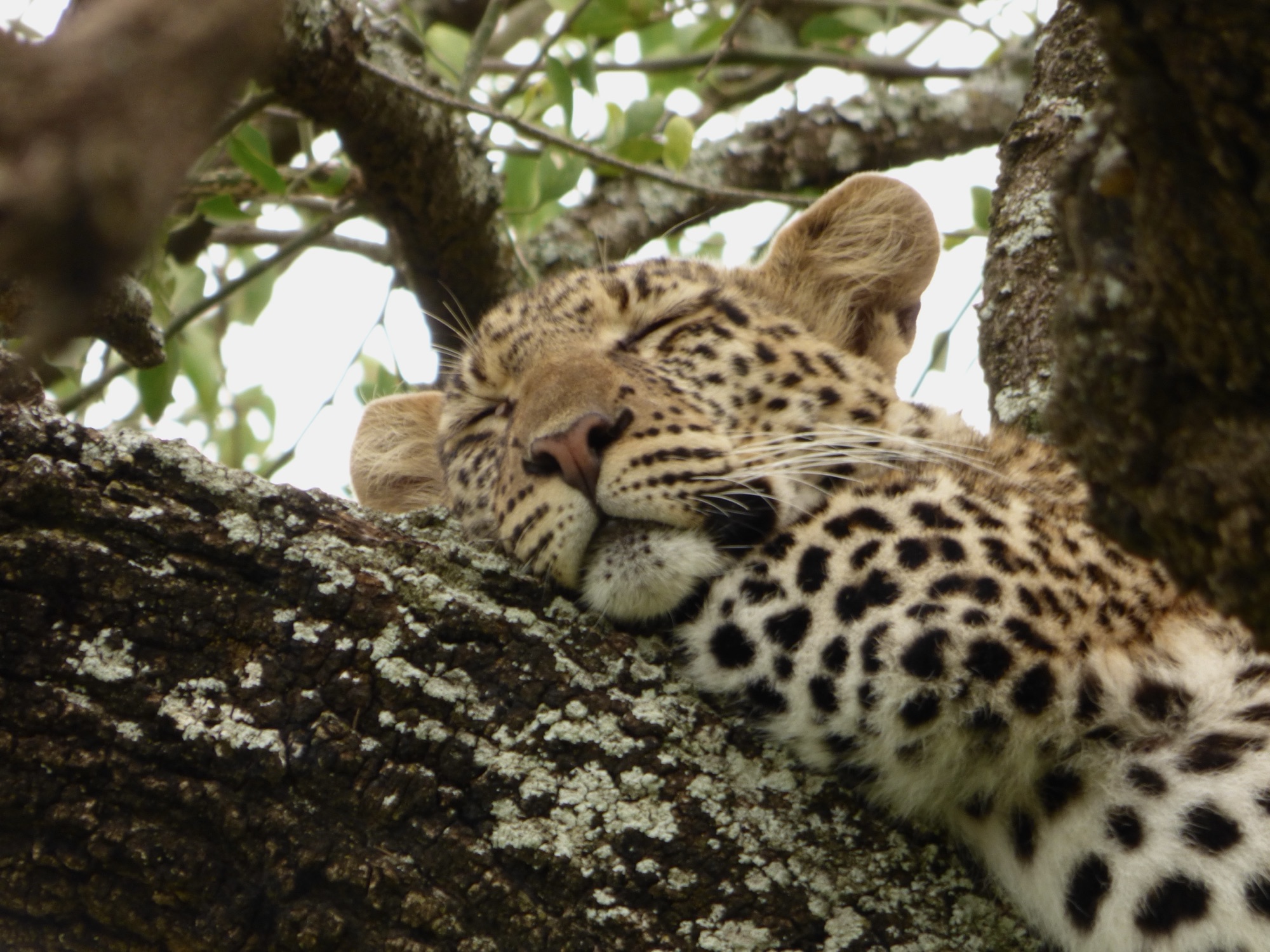
Take a peek at what a four-day safari in Tanzania is like, during the month of February.
Recently, I had the incredible opportunity to go on a safari in Tanzania. This has always been a dream trip of my mom’s, so she and my grandmother tagged along as well. Keep reading for insights into what this was like – from planning to travel and everything in between!
Booking a Safari in Tanzania
Picking a time of year for your Tanzanian Safari
There are multiple factors to consider when deciding what time of year you want to go on your safari:
- Busy season vs slow season
- Wet or Green Season vs Dry Season
- Associated costs & availability
For our safari in Tanzania, we wanted to pick an affordable option that also worked with my mom’s teaching schedule. While she has summers off, that’s a busier time of year for safaris in Tanzania. Therefore, associated costs are often higher (and temps are as well!). Instead, we opted to go over her school break in February. Added bonus: February is calving season in the Serengeti! Though we were concerned at first about weather, the rainy evenings made for a lot of greenery and beautiful landscapes. Overall, we stayed pretty dry in our safari vehicles as well.

Picking a Tour Group
When it came to picking a tour company for our safari in Tanzania, we had a few elements to consider. Cost, availability, group size, and sustainability were some of the top factors.
After requesting proposals from multiple companies, we ended up booking with Tanzania-Experience. They offer several options for lodge, camping, and luxury safaris; we booked the Impressive Tanzania small group safari. We loved that this was an “everyone gets a window seat” experience. It fit the timeframe we needed, and the planning process was also very simple. We were even able to change the booking type to triple occupancy, add on a stay upon arrival, and book a balloon safari!
One other element I want to emphasize is Africa Experience’s commitment to sustainability. I wanted to be sure whatever company we chose was as ethical as possible not just with wildlife interactions, but community and environmental impact. Even the lodges and camps selected each had their own policies and practices.


Preparing for your Safari in Tanzania
Flights & Transfers
Once we arrived in Tanzania, all travel was included in our itinerary. But how did we get there? Honestly, this was one of the pricier matters to handle – and we regret going with a cheaper option.
We booked our flights through Priceline, which I would not recommend. Not even two weeks before the trip, my mom’s flights disappeared not once, or twice, but four times. Hours on the phone later, we were able to get her checked into the second and third leg of the flight. Unfortunately, we arrived at the airport to check in for our commuter flight and… her ticket was voided. We are still fighting with Priceline on this as we had to buy a new ticket to JFK.
When all was said and done, we ended up on Kenya Airways flights to Kenya, and then to Tanzania. This was the longest flight I’ve ever taken. I learned from it – so check out my blog on surviving a long haul flight for more details on that! When we arrived, we were picked up by our driver through Tanzania-Experience and headed to our first lodge.
Immigration and Visas
This part of preparation is going to differ for everyone depending on citizenship and passports. My best advice is to look at your governing body’s site, as well as the official Tanzania immigration site. Most travelers will require a visa of some kind; U.S. passport holders at the time of this article require a Multiple Entry Visa. We opted to apply upon arrival as we were all a bit confused on what we needed. That being said, it was a simple process upon arrival. You wait in different lines for application, payment, and confirmation, before you’re able to go through to baggage claim. Questions for our group were pretty standard – how long we’d be there, why were traveling, etc.
Packing for your Safari
I’ll write a separate blog on this one to dive deep. For more information on what I packed (and what I actually used), check out my mini series over on Facebook or Instagram!
Safari Parks in Tanzania
There are any number of parks one might visit on a safari in Tanzania. Our itinerary covered Tarangire National Park, Serengeti National Park, and Ngorongoro Crater.
Day 1: Tarangire National Park
Day one of our safari in Tanzania started with a pickup at the lodge and meeting the rest of our small group. We then set off for Tarangire National Park. Upon arrival, we checked in and had a picnic lunch before our first game drive of the trip.
Known for its large elephant herds and baobab trees, this park was the perfect introduction to game drives. One of my favorite memories from this entire trip was in this park. Our vehicle pulled over to the side of the pathway to observe a group of elephants grazing. Next thing we knew, the group was on the move, fully surrounding the vehicle, so close I could have touched them (but didn’t!).
We also saw some of the other wildlife Tanzania is famous for, including marabou storks, Maasai giraffes, zebras, lions, and warthogs. Fun fact: the name of the park can be traced back to/correlated with the term “River of Warthogs.” This comes from the Mbugwe language.
This park has some man-made elements as well, such as a large watering hole, where we concluded our game drive. We got lucky again that the watering hold had visitors – another herd of elephants! We watched the babies splash around for a while before heading back to the park entrance.


Day 2-3: Serengeti National Park
A main reason we chose Tanzania for our safari destination was Serengeti National Park. An avid fan of nature documentaries, I wasn’t going on a safari without seeing it for myself (as well as seeing the Great Migration!). Our itinerary allowed for two days and two nights here, which was perfect.
The first day in the park, our group got incredibly lucky. After driving several hours to get to the park, we were excited to get started on a game drive. We were met with hundreds of wildebeests and zebras, as well as two types of gazelles. One fun fact about planning a safari in Tanzania is that you can always see the Great Migration at Serengeti NP – you just have to be in the right region of the park for that time of year.
After a bit of a drive, our guide received some communication for other vehicles – but we did not know what for. We were in luck! There was a leopard spotting! We got to see not just one, but three leopards that day, which is incredibly rare according to our guide.


Our second day (and drive) we saw even more animals, including a cheetah family and several hyenas with their young. On this day, we learned that hyenas will hide their food in water to avoid other predators and scavengers finding it. We also saw a handful of large male lions – full manes and all!


Serengeti Balloon Safari
A true highlight of our time in the Serengeti was a sunrise balloon safari. Our tour company was able to arrange this for us, and the company booked with was Serengeti Balloon Safaris. This was an inCREDIBLE experience that I would recommend to anyone. Seeing the animals from the ground is already amazing, but from the sky? Incomparable. Seeing the migration especially from the air really gave some perspective into how large this natural event really is.
After the flight, we toasted some champagne in the bush to celebrate. Our drivers from that morning picked us up and brought us to another location in the bush to have breakfast (which was delicious) before bringing us to meet up with our group again. If you’re booking a safari in Tanzania, and can afford the splurge, you can’t miss this experience.
(Note: this is not a sponsored review, I just truly loved it that much).


Mobile Camping in the Serengeti
Another highlight of this particular Tanzanian safari was getting to mobile camp in the Serengeti. While the other stays of the safari were at lodges, this was a campsite that changes location based on Great Migration patterns and location. If you’re not a big camper – don’t worry. This “camp” was in tents, but it had most modern luxuries as well – including real beds, wifi, and a working toilet in the tent. One bit of advice, however: bring bath wipes. There’s a bucket shower, but you’ll probably want to wipe off some dust still!
This particular experience was a highlight to me due to the fact that we were sleeping actually inside the park. We not only heard lions and hyenas (did you know they sound like birds?) calling through the night, but we even had a giraffe run through our camp! Not only that, but upon entering the site, we saw a trio of lions laying in the path to our camp. Talk about amazing!
As with other elements of this safari, the camp has an eco-friendly approach, which I also appreciated. If you’re booking on your own (or if you’re looking at tours!) check out Ndutu Kati Kati Tented Camp for your Serengeti stay. On top of all I’ve already said, the hospitality was next level, with the cook going so far as to make my mom a special meal on night two because she’d complimented the dish on night one. Highly recommend it!


Day 4: Ngorongoro Crater
The final park visited on our safari in Tanzania was Ngorongoro Crater. Honestly, this was one of my favorite parks, if for no other reason than the scenery. Going in February after the rains really brought out the natural beauty of the area.
This park is located in Ngorongoro Conservation area, which we’d actually stopped in en route to the Serengeti on day two. We all felt the lookout that day was beautiful – it didn’t even compare to being in the crater area itself.
Technically a caldera rather than a crater, this area was once as high as Kilimanjaro. Now, it’s home to any number of species – including two species of flamingos, hippos, black rhinos, and the Cape buffalo. We also got to see a number of baby lions, more hyenas, and even a jackal stalking a feasting pride of lions to steal some prey.
Safari in Tanzania: A Summary
Overall, I could not recommend a safari in Tanzania enough. Depending on what you’re hoping to see, I also think that February is a great time to go and save on cost as well. That being said, a few things to note are:
- There are no sighting guarantees.
- My group was incredibly fortunate to see every animal we hoped for. That will not always be the case, and that’s important to remember.
- Short stays are great – longer stays are better!
- For how much time we spent traveling to and from Tanzania, I do wish we had tacked on a few days on either end of the safari itself. I would have loved to see more of Arusha, or even taken a trip to Zanzibar to unwind after all the time in the car.
- Choose your tour wisely
- You shouldn’t need to spend a fortune on your safari. That being said, there may be a reason for lower (or higher) costs. Do your own research into why some will cost more or less than others. It could be expected weather and slow season, but it could also be an issue with quality or sustainability.
- Be mindful of the travel
- Something that isn’t always talked about is how much time is spent inside the safari vehicle. While the vehicle itself was rather comfortable with the company we went with, you know your body best. Be prepared with anti-motion sickness meds, and be ready for some rough roads.
Are you looking to book your safari in Tanzania? Check out my socials for even more insight into my recent trip!









You must be logged in to post a comment.